Experiments
Four experiments that embody some of the ideas I think could make the things on our phones less addictive and more ours. Two speculative phone UIs, a working Chrome extension you can install on Twitter/X today, and a small companion bot that lives in Telegram. I wanted the ideas on this site to point at an actual implementation, even if rough, so there's something concrete for you to react to. Try 'em out, let me know how each feels.
Experiment 01
ArgOS 2026
A clickable phone mockup with two main pieces.
The lockscreen takes you to one of three meta-apps that pull data from your usual apps and re-display it in a more condensed form. The second piece, which depends on the first, is a social media drawer where you can dial in transformations — gradual desaturation, more spacing between posts, a few other things — that make the content feel less immersive when you want it to.
Opens in a new tab. Designed for a phone frame; works best on desktop.
Experiment 02
The Scroll Lab
A Chrome extension — the one piece of this you can install today and try in five minutes.
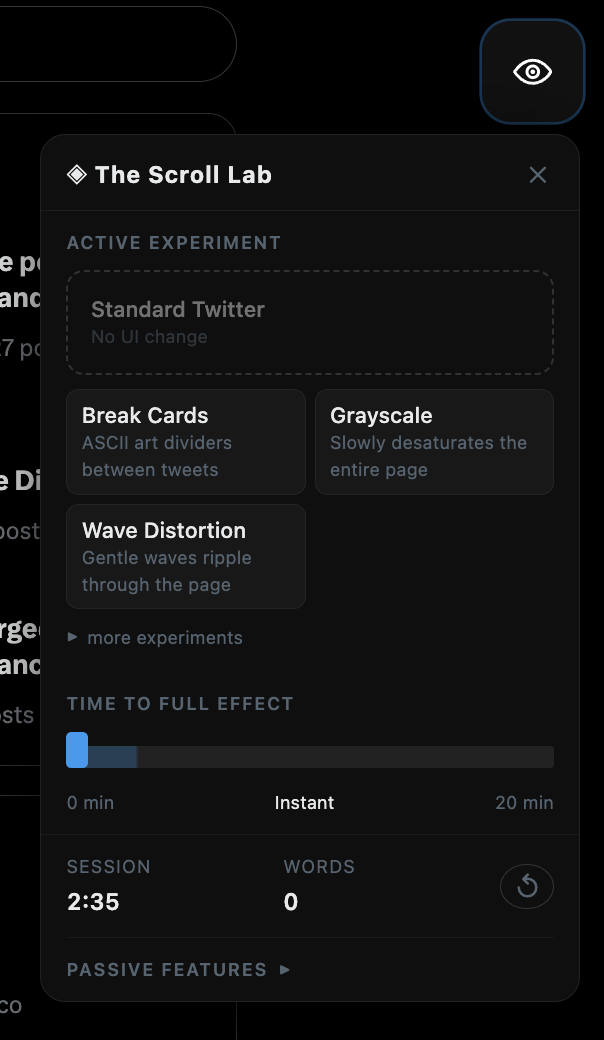
Download it, open X, and start toggling between modes — blur, grayscale, tweet padding, font cycling, break cards — each one a specific small guess about what reopens attention and what doesn’t. Most of them took ten minutes to write, a few of them changed how I scrolled for the rest of the day, and all of them are there partly to be tested on someone who isn’t me.
Please actually use it, and actually tell me what you notice, because every mode is a tiny hypothesis about which interventions do something real and which ones I just convinced myself of, and those hypotheses get a lot less imaginary the more people push on them.
On data: the extension does collect a small amount of anonymous usage information — how long the panel is open, how far you scroll, which mode is active — and that’s the whole list. No post content, no account information, nothing identifying. It’s just how I’ll eventually know whether any of this actually moves the needle.
Unzip, then in Chrome go to chrome://extensions, enable
Developer mode, click Load unpacked, and select the
unzipped folder.
Experiment 03
Argos
A small companion bot for Telegram — you talk to it, it remembers, it gets a little more yours over time.
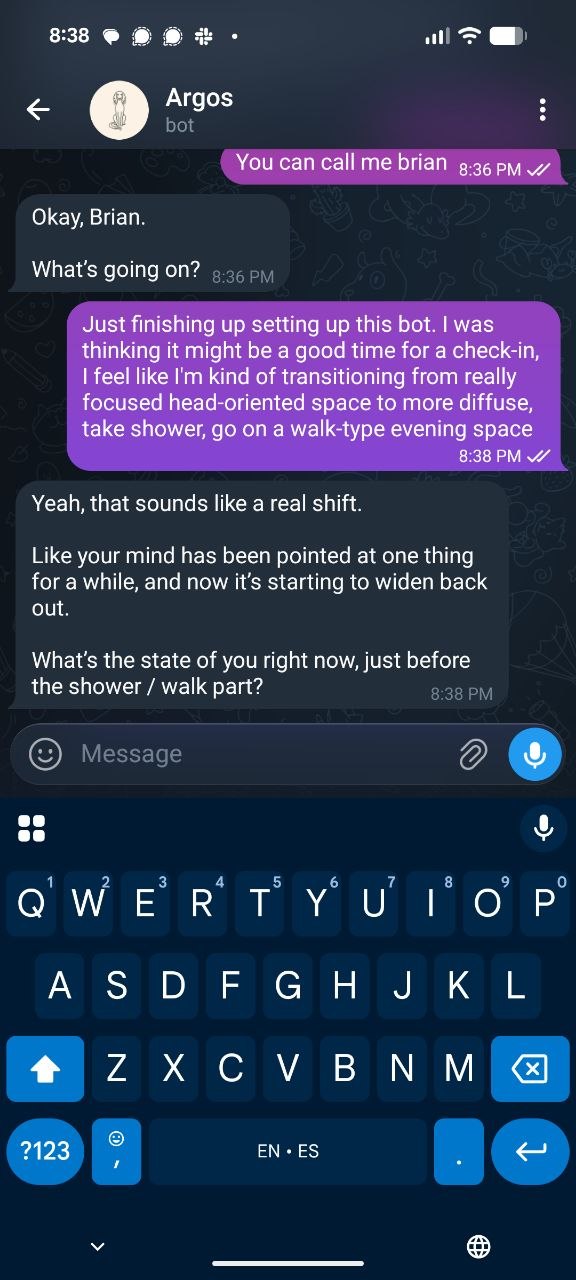
Text or voice in, text or voice back. It keeps notes on what you ask it to remember, can ping you at the times you set, and quietly gets better at being yours the more you use it. Influenced by Tasshin Fogleman's mentor mockup. There's a hosted version you can try in a minute, and a self-host path if you'd rather own the data end-to-end.
Hosted version + self-host walkthrough on the next page.
Experiment 04
ArgOS 2028
The same phone as ArgOS 2026, one piece further along — a sketch of where this is going once the hard parts are solved.
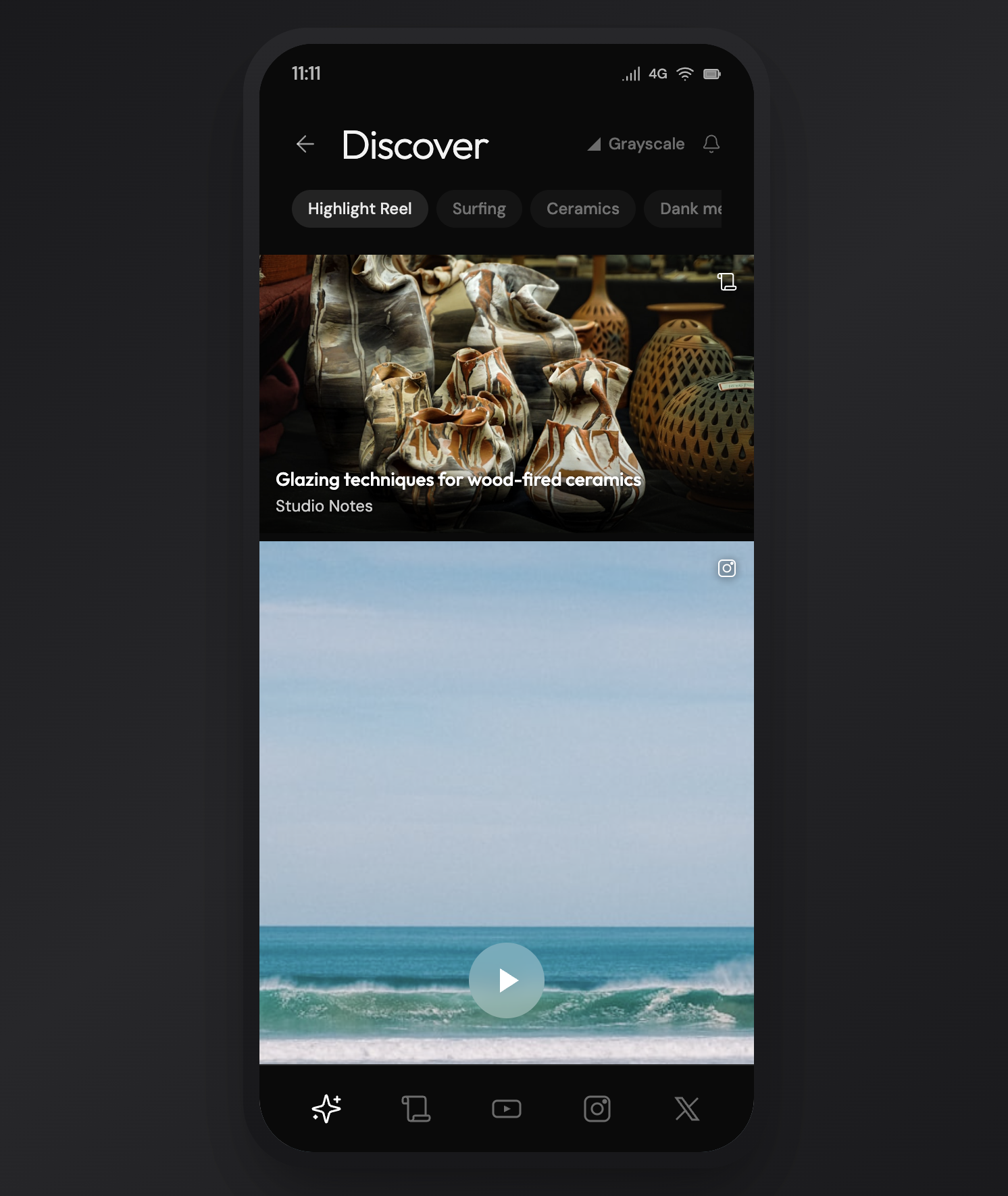
Almost everything is identical to 2026 (same modes, same aesthetic, same idea of presence as the central move), with one significant addition: Discover stops layering on top of your existing feeds and starts assembling its own, pulling across Substack, YouTube, Instagram, X, blog posts, whatever you’ve told it you care about, into a single intentional stream. The rest of the OS comes along for the ride.
Still not a real OS, just a clickable mockup built to be argued with rather than shipped, but the screens are wired up and the shape of it is mostly there.
Opens in a new tab. Click around — almost every screen is wired up. Designed for a phone frame; works best on desktop.